

What is a chemical peel, and why would you want one?
So, the word “chemical” instantly puts me off. I had never considered having a chemical peel before, and honestly didn’t really know what they were, or why you would want one. If you’ve found this article, maybe you’re considering a chemical peel and would like to know more, or maybe you’re just curious and like me up until recently, have no idea what a chemical peel actually is.
Simply put, chemical peels use acid (broad explanation as there are different types) to break down the top layer or layers of skin. This is to minimise the appearance of fine lines, wrinkles and uneven skin tone. Chemical peels can also be used to improve the appearance of fine scars, treat certain types of acne, and reduce age spots, freckles and dark patches.
Although they may sound scary to some, chemical peels have actually been around for a very long time.
A short history of the chemical peel

Upon doing a little bit of research, my first surprise was that chemical peels have actually been around for quite a while. As far back as records indicate, the first real mention of the chemical peel was by the ancient Egyptians. Ancient Egyptians used animal oils, salt, alabaster and sour milk to improve the texture of their skin. The sour milk contains lactic acid, which is known for skin rejuvenation and still used today.

Fast forward in time to Roman times. Roman people used fruit such as grapes to exfoliate their skin. The active ingredient in grapes is tartaric acid, and we use it today in many chemical peels. They also saw the benefits in using sulfur, mustard and limestone, and used these minerals to fade freckles and even their skin tone.
Moving through time, dermatologists around the world in the 1800’s used chemical peeling techniques to improve pigmentation conditions such as melasma, freckles and Addison’s disease and used chemicals such as salicylic acid, resorcinol, trichloroacetic acid (TCA) and phenol on the skin.
Skip ahead a bit to 1917 and during WWI, references to phenol under bandages for healing and “beautifying” the skin and to treat scarring. These types of peels are known today as a “deep” peel.
Chemical peels really started to gain popularity in the 1960s, and in the 70s and 80s, scientific work continued with the use of hydroxy acids (AHAs) to provide a more superficial treatment.
Back to the present day; what are the different types of chemical peel?
So, nowadays, after years of research, we have learned a number of best practices and can provide chemical peels to tackle a number of skin concerns. Chemical peels can be done at different depths depending on your desired results; light, medium and deep. Different types and depths of peel contain different chemical solutions.
Let me break this down into what you need to know when considering a type of chemical peel. It’s important first of all to choose which type you want to go for. Depending on the issues you’re addressing with the treatment, you’ll choose a chemical peel in one of three depths:
Light Chemical Peel
A light or superficial chemical peel removes the outer layer of your skin. This layer is called the epidermis. This peel is perfect for treating fine wrinkles, acne, uneven skin tone and dryness. You can have a light chemical peel as often as every two to five weeks depending on what you want to achieve.
Medium Chemical Peel
This type of chemical peel removes dead skin cells from the epidermis and from sections of the upper part of the middle layer of your skin. This layer is called the dermis. A medium depth chemical peel can also treat wrinkles, acne scars and uneven skin tone. You might repeat one of these after three to nine months to maintain your results.
Deep Chemical Peel
A deep chemical peel removes dead skin cells from the epidermis, and from the mid to lower layer of your dermis. If you have deep wrinkles, scars or precancerous growths, a deep chemical peel could be the right course of action for you. You can only have a deep chemical peel once. This is because they affect the deeper layers of the skin, and the results are more permanent.
I’ve made it visual for you too, using cake. Why? Because cake is awesome and it also has layers.

Should I go for a chemical peel, or avoid one?
Generally, fair-skinned, light-haired people are better candidates for chemical peels. However, if you do not fall into this category, a chemical peel may still be the perfect solution for you. This will depend on the type of problem being treated. This is why it’s always best to have a consultation with an expert first, as they will be able to advise you as to if it’s the right treatment for you. If not, they can advise an alternative that will tackle the problems you are looking to address.
Are there any reasons why I might not be able to have a chemical peel?
There are a few reasons why going for a chemical peel might not be the perfect solution to your skin concerns. It is best not to go for a chemical peel if you have any of the following:
Active herpes simplex or warts in the area to be treated
A chemical peel could cause herpetic activation, so it’s best to avoid if you have either herpes simplex or warts.
Wounded or sunburned skin in the area to be treated

As the old and dead skin will be lifted from your face during a chemical peel, if the skin is already damaged, you run the risk of facial scarring or burns. It is not recommended to have a chemical peel just before or just after excessive sun exposure. So if a chemical peel is something you are looking to try, avoid booking around the time you go on your holidays.
Currently pregnant or breastfeeding

Pregnant or breastfeeding women should avoid a chemical peel. Salicylic acid is a chemical used in some chemical peels and it can be harmful during pregnancy. As there is a change salicylic acid may soak into your skin, it’s best to avoid this treatment until you have had your baby and are no longer breastfeeding.
History of radiation therapy in the area to be treated
Similarly, with wounded or sunburned skin, your skin could be compromised or damaged if treated with radiation so it is best to avoid a chemical peel in this circumstance.
A history of autoimmune diseases or those with weakened immune systems
As a chemical peel is revealing lower layers of your skin and inducing healing, people with weakened immune systems and diseases such as lupus or rheumatoid arthritis should avoid a chemical peel. This is because there is a risk of infection, although small, may be more of a risk if you have an autoimmune disorder or disease. It also avoids any unnecessary risk of infection, as an alternative treatment may be available to you for your skin concerns.
Vitiligo

If you have vitiligo, any type of skin trauma may initiate the spread of your condition. For this reason, it is worth consulting with your skincare expert to find out if you can have a chemical peel, or if a safer alternative may be available to treat your skin concern.
Choosing a clinic and chemical peel

Professional chemical peels are applied by trained skin therapists or medical practitioners. A responsible clinic or Medispa will advise you to have a consultation before your treatment and will advise you on whether they think the treatment is suitable for your skin.
You can ask the therapist about:
- Their experience and qualifications
- Any risks or side effects
- The type of chemical peel they would recommend for you, and why
- What aftercare and recommendations they provide
- What will happen if anything goes wrong
- Their insurance cover, if any
- If the clinic or Medispa is regulated by Healthcare Improvement Scotland. Find out more about Healthcare Improvement Scotland here
Are there any risks to having a chemical peel?
All in all, chemical peels are safe if they are done by an experienced and qualified skin therapist who has had the correct training.
However, as with all professional, clinical treatments, there are possible risks you need to be aware of.
These include;
- Darkening or lightening of the skin
- Cold sores returning if you have had them before
- Scarring or an infection – although this is extremely rare
Your skin will be more sensitive to the sun as it heals, so your skin therapist will recommend you use sunscreen for at least a month after the treatment. Find out more about the different types of sunscreen here
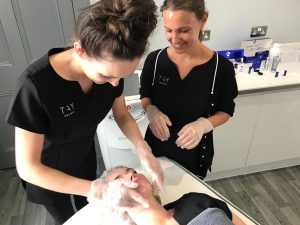
An experienced skin therapist will give you the appropriate advice on how to reduce the risks of side effects as much as possible and will provide you with an aftercare treatment plan with advice on at-home skincare products.
Will there be downtime?
This can depend on you and you face, and how your skin reacts to the treatment. It can also depend on whether you have chosen a superficial, medium peel or deep peel. With a superficial peel, your skin may feel tight for a short while after the treatment, and you may peel a little. This is because not every chemical peel causes your face to visually shed skin. With a medium depth peel, your skin may go red for a few days afterwards, and you will most likely have more visible peeling of the skin. It can take up to 6 weeks for your skin to return to normal, although usually, this is much faster. With a deep peel, the downtime could be much longer, but as mentioned above, this peel is usually only recommended for people with deep wrinkles, scars or precancerous growths.
How much do chemical peels cost?

In the UK, chemical peels can cost anything from £60 to £500 for mild to medium peels. Deeper peels could cost more than £500. In Perthshire, prices also start from around £60 for a quality superficial chemical peel, although many clinics and beauty spas tend not to share their prices on their websites without locking their clients in for a consultation first. Many Perthshire clinics offer a consultation for £30, which is then redeemable against your chemical peel when you book.
It is also important to be aware that a professional chemical peel provider will map a skincare plan with you, to ensure you are having the right treatment and that you follow the appropriate aftercare. This may involve purchasing prep or aftercare products. You should ask your clinic to provide you with details of this if they do not clearly advise you from the beginning, as this could be an additional expenditure to you.
Prices at Tay MediSpa for a chemical peel
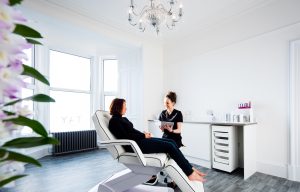
We offer clinically-proven, professional chemical peel treatments for our clients, with prices starting from £70. We use high-quality brands including Zo Skin Health [LINK] and iS Clinical [LINK] with both superficial and medium depth peels. Read more about our chemical peels by following the links below:
Zo Skin Health Stimulator Peel £70
Zo Skin Health Stimulator Peel with Deesse Pro LED Mask Treatment £95 (save £15)
iS Clinical’s Prodigy Peel P2 £245
iS Clinical’s Prodigy Peel P3 Pro £295
Book a complimentary consultation with us now to find out more, with no obligation to purchase or book a treatment >> Click here to book
For a GP consultation to look into a deep peel, and any other more pressing skin conditions, you can make an appointment with Dr Julia here or with your local NHS GP to find out what options are available to you.
Finally…
After all this research and looking into the history of the chemical peel, my opinion quickly changed. If it’s good enough for Cleopatra, ruler and Queen of Ancient Egypt, then surely it’s good enough for me. The “chemicals” in a chemical peel often derive from natural sources, which instantly put me at ease. Over the last 5,000 years, we have the experts that have managed to make chemical peels the safest and most effective they can be. So I thought I would give one a go and let you know how it goes.
I asked Michelle, one of our skincare experts and therapist here at Tay MediSpa, what she thought. After a chat, we decided that I try iS Clinical’s Prodigy Peel P2, as it is a brand new treatment recently launched and offered in-clinic. This treatment targets moderate acne and a loss of skin radiance and can be used as a course of treatments or as a one-off peel.
Michelle suggested I try one peel to see how I got on. I have Fitzpatrick I type skin, which means in other words that I have very, very pale skin (forget tanning, I tend to burn on holiday and sometimes at home too!). We discussed the peel in detail, and Michelle guided me towards the best preparation for my skin on the run-up to the chemical peel treatment day. As this is an advanced, professional chemical peel, I have to do 14 days peel preparation. This is to clear my skin of toxins and chemicals and get ready for my iS Clinical Prodigy P2 chemical peel.
Take a look at what’s involved here: Prodigy P2 Chemical Peel
I’m excited to document my journey and let you know how it went!
Find out more
Any more questions? Is there anything that is concerning you, or wanting to know more?
Pop us a message on Facebook or call us on 01738 451 567 to find out more.
Hannah – Tay Medispa
55 York Place, Perth, PH2 8EH
info@taymedispa.co.uk | 01738 451 567
Share This